Mississippi oyster industry rebuilds as reefs show signs of growth
By Jakira Hunt, Roy Howard Community Journalism Center and Justin Glowacki, Roy Howard Community Journalism Center | Originally published by Mississippi Today
PASS CHRISTIAN — Mississippi’s oyster reefs are showing signs of growth ahead of the 2026-27 season, but for fishermen like James Miller, rebuilding the industry also means finding enough buyers to make getting on the water worthwhile.
“We’ve just got to get our market moving again,” Miller said. “It’s going to happen. It will take time.”
At a Sept. 8 stakeholder meeting in Pass Christian, the Mississippi Department of Marine Resources estimated there are just under 400,000 sacks of oysters across surveyed reefs in the Mississippi Sound, up from about 275,000 last year.
The growth follows a roughly 50,000-sack harvest during the 2025-26 season, which MDMR said was the largest harvest in more than a decade.
Joe Spraggins, executive director of MDMR, said Mississippi is moving in the right direction.
“We’ve got big oysters. That’s what started last year, right? That’s all that’s in Mississippi,” Spraggins said. “We can get that reputation back by bringing in 100,000 sacks of market-sized oysters.”
Reef health
Mississippi’s oyster industry is still rebuilding from the effects of the 2019 Bonnet Carré Spillway openings, which sent large amounts of freshwater into the Mississippi Sound and caused salinity levels to fall.
MDMR estimated oyster mortality across major reefs in the western Mississippi Sound at nearly 97% following the openings.
Since then, the department has used reef monitoring, cult placement and other restoration efforts to rebuild oyster populations.
Jason Rider, director of MDMR’s Shellfish Bureau, pointed fishermen toward Henderson Point and St. Joe, where population estimates increased and harvest pressure was relatively low last season.
“We’re seeing the growth across nearly every size class with the spats. That’s picking up significantly,” Rider said. “That’s really encouraging for us. That’s a really good, strong sign of growth.”
Other reefs did not see the same gains.
According to MDMR, the density of market-size oysters at Pass Christian Dredging declined from 19 oysters per square meter, or per 10.76 square feet, in 2025 to 8.2 in 2026. At Pass Christian Dredging, density dropped from 2.7 to 1.2 oysters per square meter.
MDMR officials said Pass Christian Tonging, Pass Christian Dredging and Pass Marianne were among the areas affected by heavy rainfall and lower salinity this summer.
Rider said the department will continue monitoring the reefs and investing in restoration efforts.
This summer, MDMR placed limestone and shell, known as cultch, across 236 acres of oyster habitat. Much of that work was concentrated on reefs affected by the heavy rainfall.
Managing the harvest
MDMR plans to maintain a 30% harvest quota for individual reef areas this season. Because the quota is based on oyster population estimates, the number of sacks available for harvest can increase or decrease as populations change.
During the 2025-26 season, harvest exceeded the 30% quota in several areas. MDMR reported harvests of roughly 41% at Pass Christian Tonging, 37% at Pass Christian Dredging and 34% at Pass Marianne. Henderson Point and St. Joe were much lower, at about 8% and 1%, respectively.
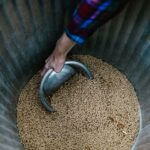
estimates nearly 400,000 sacks of oysters across surveyed reefs in the Mississippi Sound ahead of the 2026-27 season. Credit: Justin Glowacki/RHCJC
Miller said he believes individual reefs should be closed once they reach the 30% quota to prevent too much harvesting in one area.
“They keep the reef sometimes open too long in areas,” Miller said. “Once they meet their quota, they need to shut it down.”
The Roy Howard Community Journalism Center has reached out to Rider for more information about why harvest exceeded the 30% quota in some areas last season and how MDMR plans to manage the quota this season. Rider has not yet responded.
MDMR also plans to maintain last season’s daily commercial limits of 15 sacks per tonging vessel and 20 sacks per dredging vessel. Those daily limits are separate from the 30% seasonal harvest quota.
Miller supports keeping the daily limits in place. He said allowing fishermen to bring in more oysters would do little good if there are not enough buyers.
“If you can’t sell them, why bring them in?” Miller said.
Rebuilding the market
The 2026-27 oyster season is scheduled to open Oct. 1, nearly two weeks earlier than last year’s Oct. 13 opening.
Miller, a lifelong fisherman from D’Iberville, supports the earlier opening because he said lower rainfall in the fall can give fishermen more opportunities to harvest before river conditions lead to reef closures.
He said the commercial market remains another challenge after years of limited Mississippi harvests.
“When you’re off for five years, your market is slowly progressing, coming back,” Miller said.
He said oysters from other Gulf states, including Louisiana and Texas, have filled some of the demand that Mississippi fishermen previously served.
“We’ve got a kind of show that we do have a good oyster for them to buy, and we can boost our market back up,” Miller said. “It’s going to take time.”
Operating costs are another concern.
Miller said fuel costs have cut into his income from fishing and shrimping. He estimated he has recently spent $3,500 to $4,000 a week on fuel while working on the water.
Still, Miller said he believes keeping harvest limits in place while Mississippi rebuilds both its oyster populations and commercial market is the best approach.
“We had a good thing last year,” Miller said. “It’ll be a good thing this year.”
This article was originally published by Mississippi Today and is republished here under a Creative Commons license.
Source: Original Article