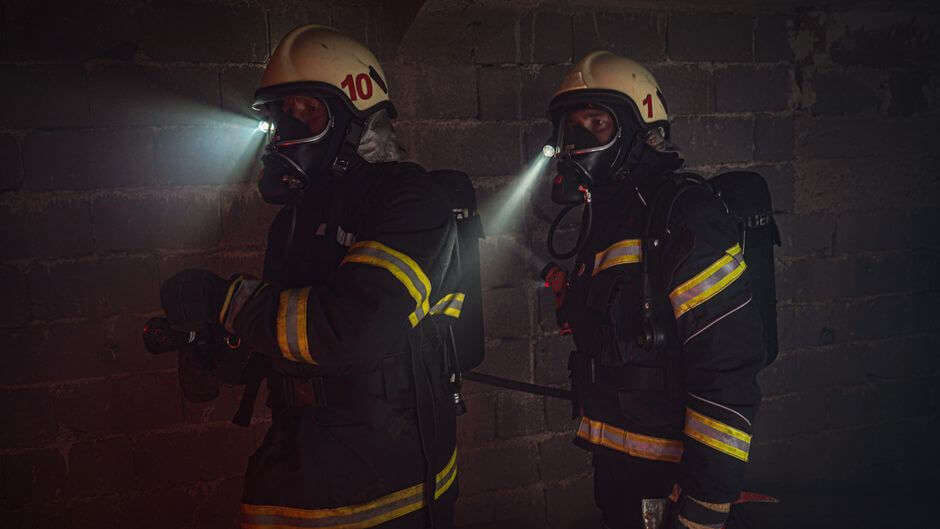
By Morgan Gill, Roy Howard Community Journalism Center | Originally published by Mississippi Today
Audio recording is automated for accessibility. Humans wrote and edited the story.
Mississippi fire service leaders are raising concerns about first responders mental health as the state’s suicide rate remains above the national average.
According to the Centers for Disease Control and Prevention, Mississippi’s suicide rate is 15.09 deaths per 100,000 residents, compared with the national rate of 14.4. Newly released data from the Mississippi Violent Death Reporting System showed that 426 people died by suicide in Mississippi during 2024, accounting for about 43% of the state’s violent deaths. Mississippi’s suicide rate has remained above the national average for several years, according to CDC data.
Mental health professionals and first responders say the firefighter deaths, coupled with the state’s suicide statistics, underscore the need for earlier intervention, greater awareness and less stigma around seeking help. They said trauma, major life changes and isolation can increase suicide risk for some people.
Kyle Hill, president of the Mississippi Fire Chiefs Association and Lamar County fire coordinator, said four firefighters in Mississippi died by suicide over the past year. He said the deaths reflect the emotional toll of the job.
“We’re supposed to be the heroes in the community or the people in the community that are supposed to be there to serve,” Hill said. “How do we do that if we’re affected by it, too?”
Hill said first responders routinely encounter traumatic situations that can leave lasting emotional scars, particularly calls involving severely injured or deceased children. He said House Bill 1190, passed in 2024, created the Mississippi First Responder PTSD and Suicide Prevention Task Force to help address gaps in mental health support for emergency responders.
Hill said stigma surrounding mental health often keeps first responders and others from seeking help.
“We’re supposed to be big, strong men or big, brave women, and you’re not supposed to talk about those things,” Hill said. “You’re supposed to deal with it. You need to be able to have resources available so you can talk things over and express your emotions.”
Hill encouraged first responders who are struggling to use confidential employee assistance programs or reach out to human resources, another department or someone they trust if they are uncomfortable speaking with a supervisor.
He said no one should feel they have to face a mental health crisis alone.
Suicide affects Mississippians of all ages
A Mississippi Department of Mental Health map shows behavioral health crisis services and community mental health center regions across the state, including contact information for mobile crisis response teams. Credit: Mississippi Department of Mental Health
Although first responders face unique occupational risks, mental health professionals say many of the same challenges — including stigma, isolation and major life changes — can affect people across Mississippi.
Labethani May, director of suicide prevention at the Mississippi Department of Mental Health, said suicide prevention begins with addressing mental health long before someone reaches a crisis.
“We talk about mental health because you can’t address suicide without addressing mental health,” May said. “People don’t just wake up one day and say, ‘I’ve had enough.’”
May said the department is studying why more children are dying by suicide in Mississippi. She said bullying, online harassment and social media can contribute to suicide risk among some young people, although the department continues to research the trend.
“All of our kids have access to devices,” May said. “It’s hard for parents to really guard and monitor what their children are seeing.”
According to the Mississippi Department of Mental Health, suicide is the third leading cause of death among people ages 10 to 24.
May pointed to the 2022 death of 16-year-old Walker Montgomery as an example of how online exploitation can escalate into a mental health crisis. Investigators said Montgomery died by suicide after someone using a fake identity targeted him in a sextortion scheme on Instagram.
“They’re manipulated into situations,” May said. “Unfortunately, because they’re not able to process that mentally and emotionally, sometimes we see tragic things like deaths by suicide.”
May said suicide also affects older adults. She said people 65 and older may face increased risk during major life changes such as retirement, the death of a spouse or children moving away because those transitions can affect a person’s sense of identity and connection.
She said behind the statistics are families whose lives have been shaped by suicide.
Turning experience into prevention
A Mississippi Department of Mental Health“Shatter the Silence” graphic explains warning signs of suicide and encourages the community to support someone in crisis. Suicide prevention help can be accessed through the 988 Suicide & Crisis Lifeline and other emergency resources. Credit: Mississippi Department of Mental Health
For Beaumont resident Tina Brown, suicide has affected multiple generations of her family.
Brown’s father died by suicide when she was in eighth grade. Years later, Brown said she experienced suicidal thoughts after learning she had exhausted her financial aid with three college classes remaining before graduation.
“When I found out that I was going to have to pay and they didn’t inform me of that, I became very depressed,” Brown said. “I’m like, ‘All this hard work.’”
Brown said reaching out to friends and asking herself what she could learn from the situation helped her through the crisis before those thoughts progressed.
She told her father’s isolation also taught her to recognize warning signs in others.
“By me observing depression, by me just recollecting my father and how he was always alone — he isolated everyone — those are some signs that we should look for,” Brown said.
Brown now teaches emotional regulation skills to others.
The Mississippi Department of Mental Health offers free suicide prevention programs, including Shatter the Silence and Mental Health First Aid, to help people recognize warning signs and respond to mental health challenges.
Anyone experiencing a mental health crisis can call or text 988 to reach the Suicide & Crisis Lifeline or chat online at 988lifeline.org.