Trump pushes Mississippi to redraw congressional districts after Supreme Court ruling. But legal and political hurdles loom
By Taylor Vance | Originally published by Mississippi Today
President Donald Trump is urging Mississippi officials to redraw the state’s four congressional districts as part of his national push for Republican states to flip Democratic districts to the GOP before this year’s federal midterm elections, several state and federal officials familiar with with the communication told Mississippi Today.
But there would be significant hurdles in the Magnolia State, and it’s unclear if the state’s Republican leaders are on board with the plan. Mississippi has already conducted primary elections for congressional races, so to redraw the districts, state lawmakers and the governor would need to invalidate the primary elections.
Erasing primary results would be unprecedented, and it’s unclear if that action would survive a legal challenge. It’s also unclear if Mississippi’s three incumbent Republican congressmen would be on board with having to run again in new primaries, a costly endeavor.
Also, further gerrymandering in the state with the highest Black population might backfire on Republicans and make Democrats more competitive.
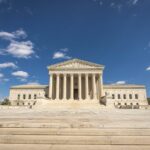
A recent U.S. Supreme Court decision that struck down a majority-Black congressional district in Louisiana has amplified an already intense national redistricting battle because it rolled back protection against racial discrimination in redistricting.
The 2nd Congressional District that U.S. Rep. Bennie Thompson represents is Mississippi’s only Democratic district. It’s one of the poorest areas in the nation, and it comprises most of the majority-Black Jackson metro area and most of the majority-Black Delta region.
The way state lawmakers would ensure Thompson can’t win that seat again is to dismantle it, diluting the Black vote with parts of surrounding majority-white districts. Despite having the highest percentage Black population of any state, at about 38%, Mississippi has historically had few Black elected officials, due largely to past gerrymandering and Jim Crow laws and practices.
Thompson’s office did not respond to a request for comment.
In the South, Black citizens tend to vote Democratic, and white voters tend to vote for Republican candidates. Mississippi’s current U.S. House district configuration has three safe Republican seats and one safe Democratic seat.
In Mississippi, with its high percentage of Black voters, lawmakers run the risk of making currently safe Republican districts more competitive by adding Black voters to the majority-white districts.
Lawmakers ended their regular session in early April, and Republican Gov. Tate Reeves is the only person who can call them into a special session to consider new legislation. During a special session, Reeves sets the agenda, and lawmakers cannot consider anything outside the parameters the governor sets.
Reeves has ordered lawmakers to return to Jackson on May 20 to debate redrawing Mississippi’s three state Supreme Court districts, but that is the only item on the agenda so far.
Reeves’ office did not respond to a request for comment.
Other Southern Republican-led states are taking steps to redraw their congressional districts ahead of this year’s midterms. In Alabama, Republican Gov. Kay Ivey announced Friday that she is calling a special legislative session to begin Monday in hopes that the Supreme Court allows the state to change its U.S. House map ahead of the November midterms.
In Tennessee, Republican Gov. Bill Lee also announced a special session for the GOP-controlled Legislature to try to break up the state’s one Democratic-held House district, centered on the majority-Black city of Memphis.
Louisiana already has suspended its May 16 congressional primary to allow time for lawmakers to approve new House districts, though that is being challenged in court.
This article was originally published by Mississippi Today and is republished here under a Creative Commons license.
Source: Original Article