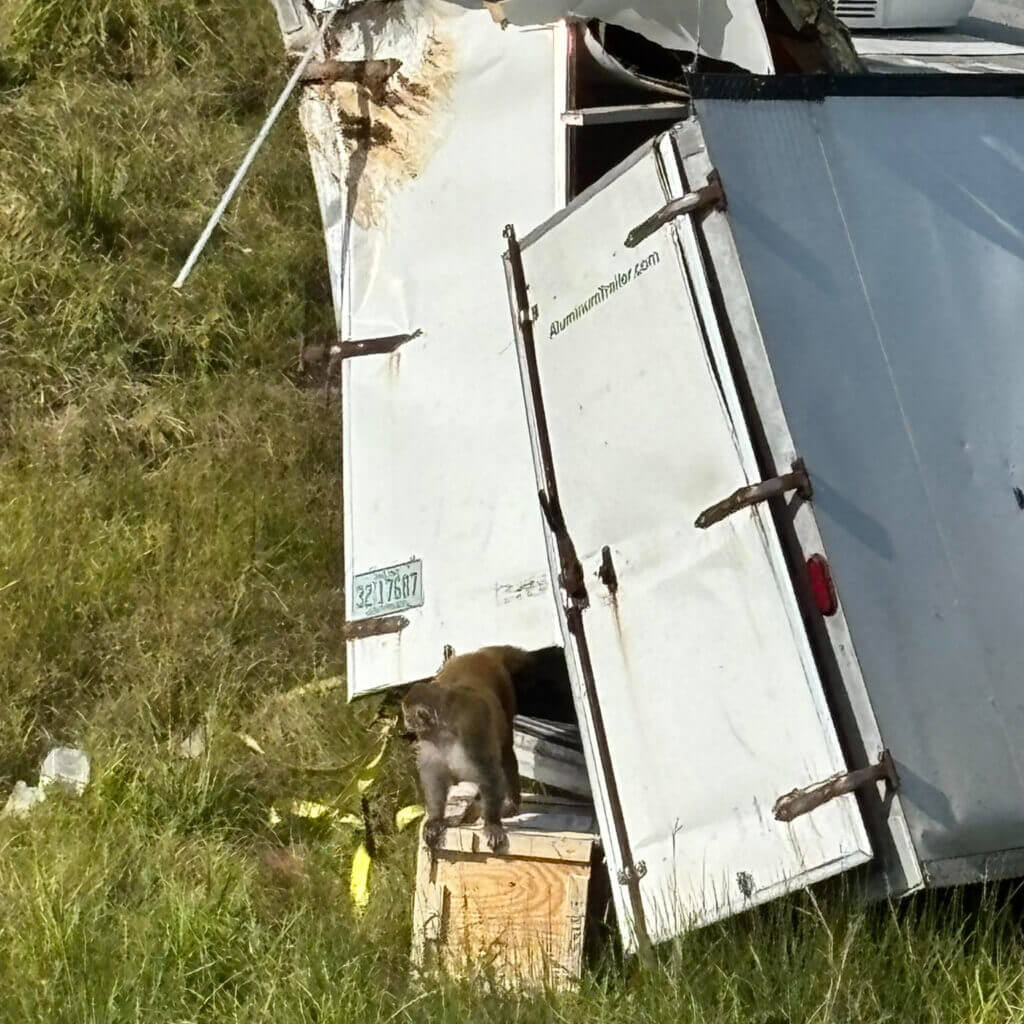
“Nonhuman primates at the Tulane National Biomedical Research Center are provided to other research organizations to advance scientific discovery. This is a common practice among research organizations. On Oct. 28, a vehicle was transporting 21 Rhesus Macaques when an accident occurred on I-59 in Mississippi. The nonhuman primates were not being transported by Tulane, not owned by Tulane, and not in Tulane’s custody. The primates in question were not carrying any diseases and had received recent checkups confirming that they were pathogen-free. Although Tulane did not transport or own the nonhuman primates at the time of the incident, we sent a team of animal care experts to assist in this tragic incident. Questions regarding the missing nonhuman primates and other details of this case should be referred to the Jasper County Sheriff’s Office.”
Original story below:
Heidelberg, Miss. (Jasper County Sheriff’s Dept.) — Authorities are urging caution after a truck transporting monkeys to a testing facility in Florida overturned near the 117-mile marker north of Heidelberg, releasing several animals into the area.
According to the Jasper County Sheriff’s Department, multiple monkeys escaped from the overturned vehicle, and residents in the vicinity are being advised not to approach or attempt to capture the animals. Officials warn the monkeys may be aggressive and pose potential health risks.
Emergency crews and wildlife officials were on the scene working to locate and safely contain the escaped animals. Motorists and residents were asked to remain alert and contact 911 immediately if they spot any of the monkeys.
Tulane University also provided a statement about the monkeys on 10/28/25:
“Non-human primates at the Tulane National Biomedical Research Center are provided to other research organizations to advance scientific discovery. The primates in question belong to another entity and are not infectious,” Tulane University said in a statement. “We are actively collaborating with local authorities and will send a team of animal care experts to assist as needed.”