SOUTHAVEN, Miss. — Local authorities are urging residents to remain vigilant as scammers increasingly use tactics of fear and trust to target personal finances.
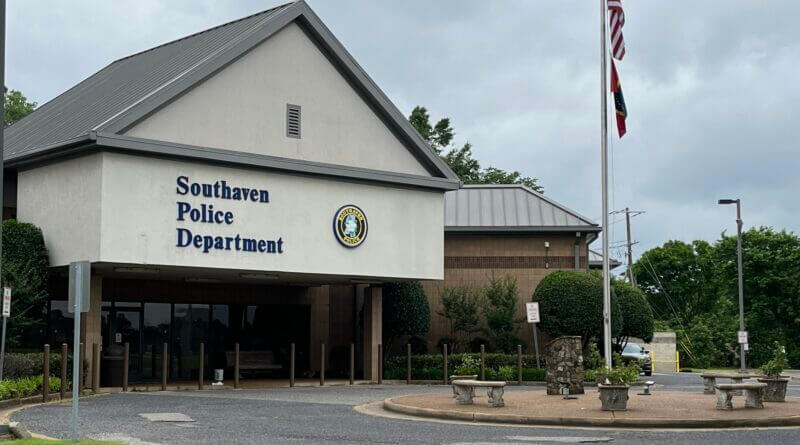
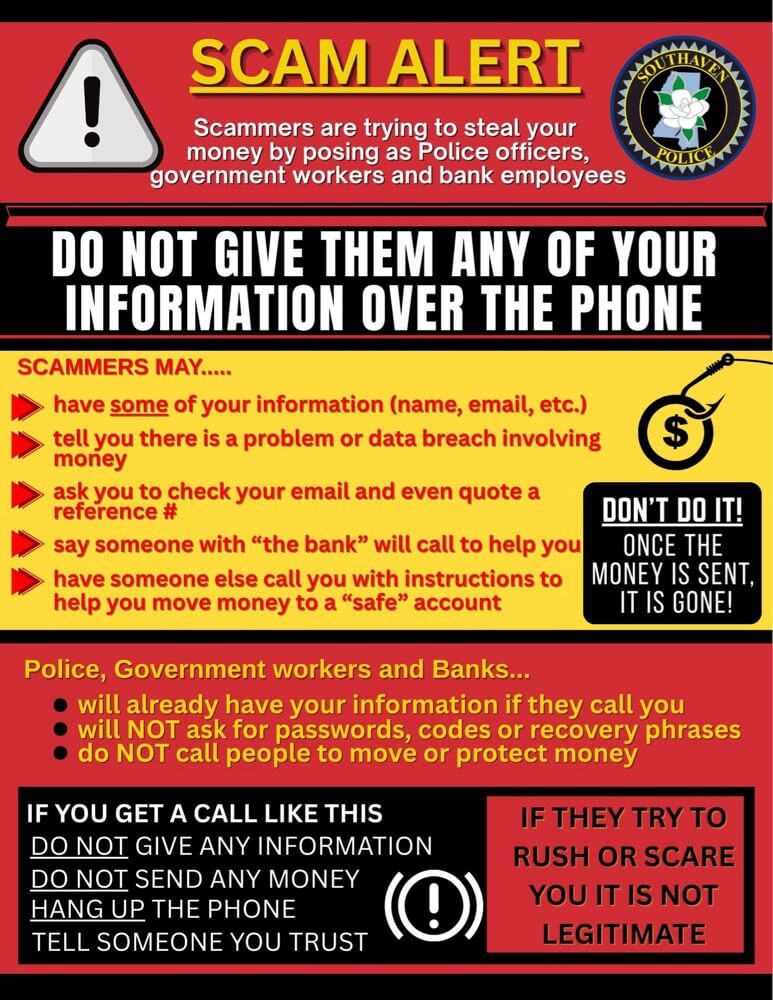
The Southaven Police Department issued a “Scam Alert” this week, warning that individuals are posing as police officers, government officials, and bank employees to steal money and sensitive data. Officials emphasize that once money is sent to these fraudulent actors, it is often impossible to recover.
How the Scams Work
According to law enforcement, scammers often begin the call with a sense of legitimacy by quoting a victim’s name or email address. Common tactics include:
Claiming there is a “data breach” or urgent problem involving the victim’s money.
Directing victims to check their email for a specific reference number.
Staging follow-up calls from “bank representatives” or “safe account” specialists.
Instructing victims to move their funds to a “protected” account for safety.
“Scammers rely on trust and fear to get your money,” the department noted in its advisory. “If they try to rush or scare you, it is not legitimate.”
Identifying Red Flags
Authorities remind the public that legitimate police departments, government agencies, and banks operate under strict protocols. Real officials will already have your basic information on file and will never:
Ask for passwords, security codes, or recovery phrases over the phone.
Call citizens to request that they move or “protect” money.
Pressure individuals into immediate financial transactions.
Steps for Protection
If you receive a phone call that makes you uneasy, Southaven Police recommend hanging up immediately.
Residents should contact their bank or service provider directly using a verified phone number from an official statement or the back of a credit card. Most importantly, do not provide any personal information or send money to an unverified caller.
“Tell someone you trust,” the alert concludes, encouraging residents to share these warnings with friends and family to prevent further victimization.
Bob Bakken provides content for DeSoto County News and its social media channels. He is an award-winning broadcaster, along with being a reporter and photographer, and has done sports media relations work with junior and minor league hockey teams. Along with his reports on this website, you will find this veteran media member providing sports updates on Rebel 95.3 FM Radio.