As winter storms bring ice, snow, and widespread power outages across North Mississippi, many families turn to portable generators to keep refrigerators running, charge phones, and stay warm. But one small mistake can turn a helpful tool into a deadly hazard.
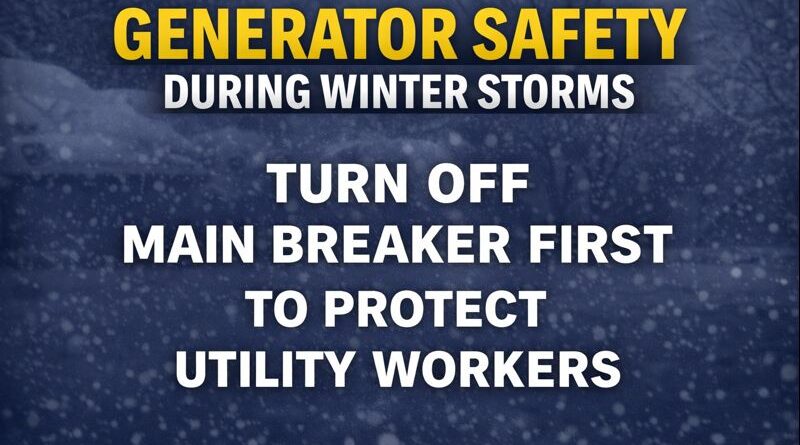
Before connecting a generator to your home, you must turn off your home’s main breaker.
This step is not just a recommendation — it is a critical safety rule.
Why the Main Breaker Matters
When a generator is connected to a home while the main breaker is still on, electricity can travel backward through the power meter and into neighborhood power lines. This is called backfeeding.
Backfeeding can:
Electrocute or seriously injure utility line workers
Damage your generator
Destroy household wiring and appliances
Start electrical fires
During a winter storm, line crews are working around the clock to restore power in dangerous conditions — often in the dark, cold, and ice. They rely on power lines being truly de-energized. A single improperly connected generator can send live electricity back into those lines without warning.
The Right Way to Use a Generator
If you plan to power parts of your home with a generator, follow these steps:
Turn OFF the main breaker in your electrical panel This disconnects your home from the power grid.
Plug appliances directly into the generator Use heavy-duty outdoor extension cords rated for the load.
Never plug a generator into a wall outlet This is extremely dangerous and illegal in most places.
Keep the generator outdoors Place it at least 20 feet from doors, windows, and vents to prevent deadly carbon monoxide buildup.
Only restore the main breaker when utility power returns Once the grid is back on and the generator is disconnected, you can safely turn your main breaker back on.
Protecting the People Who Are Working to Help You
Power crews are some of the first responders during winter disasters. They climb icy poles, work around fallen trees, and restore electricity in dangerous conditions so families can get heat, water, and communications back.
Turning off your main breaker when running a generator helps ensure they go home safely when the job is done.
The Bottom Line
A generator can be a lifesaver during a winter storm — but only when used correctly.
Turn off your main breaker before connecting a generator. It’s one simple step that can prevent fires, protect your home, and save lives.