Your questions about Mississippi data centers, answered
By Mississippi Today | Originally published by Mississippi Today
Mississippi Today has been reporting on proposed data centers across the state. State leaders say the industry is a key driver for Mississippi’s economic future.
In Mississippi and across the U.S., residents have voiced concerns about potential energy costs and water usage, as well as air and noise pollution from the generators needed to power data centers. At the same time, data centers represent a historic investment in the state that is fueling demand in the construction industry, paying millions in taxes to school districts and local governments.
There are a lot of unknowns with data centers in Mississippi given how early the state is in the buildout. The first project was announced in 2024. Read our past reporting here.
Map of data centers in Mississippi: Confirmed and potential projects
Here are answers to some frequently asked questions about data centers:
Data Centers 101
What are data centers?
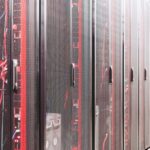
A data center is a physical space that houses equipment, such as servers and routers, needed to process, store and distribute data.
Data is essential to the way we use the internet today. When we log into our email or watch a movie on Netflix, we are generating and using data. That data is stored on servers inside data centers.
What is artificial intelligence, or AI?
Artificial Intelligence is a broad term meaning a computer or system that can perform tasks generally associated with human intelligence, such as problem solving, learning and decision making.
Chatbots, such as OpenAI’s ChatGPT or Anthropic’s Claude, are examples of generative AI. Generative AI doesn’t just recognize patterns, it uses that pattern recognition to produce new content, such as text and photos.
In order to create new content, these models have to be trained on huge amounts of data. This is a time and energy consuming process that requires tens of thousands of computer chips. The chips are stored in data centers.
If data centers have been around for a long time, why are so many being built right now?
Generative AI requires a lot of computing power, and there’s not enough right now to support the current and anticipated demand. Tech companies are racing to build more data centers to train and deploy new AI models.
The chips, physical infrastructure and construction of such a large number of data centers is expensive, which is why companies are spending hundreds of billions to build data centers.
So, why build a data center in Mississippi?
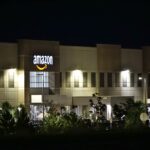
Data centers need a large amount of reliable power and land, and companies are looking to build them quickly. Mississippi offers all of the above. In addition, leaders at Amazon have said the partnership and collaboration with Entergy and state officials and lack of strict regulations have made the process of building the data centers here effective and quick.
Mississippi has relatively few data centers, compared to other states. The 10 states with the most data centers have over 100.
Water & Environmental Impact
How much water do data centers need, and how will they impact our water supply?
The short answer is it depends on the facility.
Large data centers, which often need water for cooling, use up to 5 million gallons a day, or the same as a town of 10,000 to 50,000 people, according to the Environmental and Energy Study Institute. Yet some, such as Amazon’s planned facility in Clinton, will instead implement “air cooling,” meaning they won’t need large volumes of water. The company is also planning to use recycled municipal wastewater at its Canton data center in a partnership with Veolia.
As far as where they get water from, a data center can either purchase water from a local utility or dig a well, in which case it would need a permit from the Mississippi Department of Environmental Quality.
Regarding other data centers coming to Mississippi, companies have not said much publicly yet about their water footprints, but this is something we’ll be focusing on in our ongoing coverage.
What noise and air pollution levels will nearby communities experience?
Noise and air pollution concerns come primarily from data centers that self-generate power. The most glaring example we’ve reported on has been xAI’s cluster of natural gas turbines in Southaven. Because those turbines operate in a state-sanctioned loophole that allows them to run without permits, there’s no official data on how much toxic emissions are coming from the facilities. The Southern Environmental Law Center argued in a lawsuit that the cluster is likely emitting harmful amounts of nitrogen oxides and formaldehyde.
Moreover, Southaven residents for months complained about a constant humming noise coming from the facility. Mississippi Today reporters could confirm hearing the noise when visiting the area.
What are the primary power sources for data centers?
For the most part, data centers in Mississippi will source their power from whichever utility owns the service area for that facility, such as Entergy Mississippi and Mississippi Power. It’s hard to delineate which types of power go to which places, as utility companies blend power from an array of sources before sending electricity to an end user. Entergy has said that investments from data center companies such as Amazon will help the utility bolster its natural gas generation. Mississippi Power also successfully petitioned to keep an aging coal unit alive to power a data center in Meridian.
Impact on electric bills?
Will data centers drive up my utility bill?
Last year, Entergy Mississippi CEO Haley Fisackerly told Mississippi Today that customers’ electric bills will go up less than they would have without the arrival of Amazon’s data centers. Because of the immense amount of power Amazon will have to buy to run the facilities, Entergy will be able to use that revenue to make grid improvements it otherwise wouldn’t be able to, the company said. According to Entergy, customers’ bills were going to go up regardless as both prices and demand for gas are rising, necessitating new generation capacity. But limited information around Amazon’s projected energy use, as well as limited oversight approved by state lawmakers in 2024, makes it hard to verify those claims. A recent report from Synapse Energy Economics Inc. estimates that the data center projects have already increased rates for Entergy Mississippi’s residential customers by $10.60 a month.
How much power does a data center use?
According to research from the International Energy Agency, a typical AI-focused data center uses enough electricity to power 100,000 homes. Another report, from the Department of Energy’s Lawrence Berkeley National Laboratory, found that data centers accounted for over 4% of the country’s electricity consumption in 2023, adding that the number could reach as high as 12% by 2028.
Economic Impacts
How many jobs do data centers create?
Amazon has said its data centers across the state will create 2,000 jobs, AVAIO in Brandon said it will create at least 60 direct jobs, xAI in Southaven said the project will create hundreds of permanent jobs and Compass in Meridian is expected to create thousands of direct and indirect jobs.
The projects also create new jobs in construction and other indirect jobs, such as, service providers, caterers, electricians and more
In other states, the number can range from 50 to 400. Critics say the number of jobs is relatively few, especially relative to the size of capital investment. But proponents say new jobs are new jobs, that these jobs pay well and that services/surrounding businesses benefit from the center which creates more jobs in the area.
What are the benefits of having a data center in a community?
Like many things, it is a benefits vs risks situation. How do governments and companies maximize benefits for the community and minimize risks?
People often point to Virginia, given the large number of data centers built and operated in the state over the past 15 years. An important caveat is that the technology has significantly evolved since then.
Here’s a story on how a community used tax revenue from data centers to create an affordable housing program.
In Loudon County, Virginia, sometimes known as Data Center Alley, the economic developer who led the data center development told the Wall Street Journal that he estimated property taxes are down 48 cents on the dollar in the county and 45% of county revenue comes from data centers.
This article was originally published by Mississippi Today and is republished here under a Creative Commons license.
Source: Original Article