Sweet as Kickapoo Honey: Civil engineer finds harmony as a beekeeper
By Vickie D. King | Originally published by Mississippi Today
CLINTON – Mauricka McKenzie didn’t grow up imagining he’d become a beekeeper one day.
By profession, he is a civil engineer and president of Cornerstone Engineering, LLC, in Clinton.
His path to beekeeping began in one of those subtle, unexpected ways: as a casual, out-of-the-blue suggestion from a friend after McKenzie purchased acreage along Kickapoo Road in rural Clinton that was once a pecan orchard.
“I thought, ‘I’ll rejuvenate this pecan farm.’ Sell pecans,’” McKenzie said. “But Mother Nature had other ideas. Those trees just weren’t producing like I knew they could. One day, a friend of mine said, ’Get you some honey bees.’”
For McKenzie, that planted a seed.
“I liked the idea of it,” said McKenzie. “Honey bees.”
Even now, the thought of those first inklings makes him smile. And Kickapoo Honey was born.
“So I started doing the research. I learned about types of honey bees, cross-pollination, which flowers attract bees and the honey they produce. My bees are Italian honey bees. They’re gentle and famously industrious,” he explained. “They’re known for their calm temperament and steady honey production. Ideal for Mississippi’s long, warm seasons.”
“My first year, I started with two nucs, consisting of a queen and ten thousand bees,” McKenzie said. “My bees did pretty good and I realized how much I loved being out here. They fascinate me and I admit, I’ve become a bit obsessed. I also planted a couple of acres of wildflowers and white clover.”
Nucs, pronounced “nukes,” is short for nucleus colonies of bees. They are “starter” beehives and are the most popular way for people to begin their journey into beekeeping. Italian honey bees, like McKenzie’s, have been prized in American apiaries since the 1850s.
By year two, McKenzie had grown his apiary, a bee yard, to six nucs and had successfully caught two swarms, producing 10-15 gallons of honey. However, disaster struck in his third year. Mites decimated nearly half his hives.
“That was unexpected and kind of scary, and I knew I had to do more research,” he said. “I learned a lot online and from other beekeepers like Mack Busby in Soso. He’s been a beekeeper for ages. I treated my bees, saving those the mites hadn’t reached.”
Beekeepers treat their bees against mites using miticides – organic acids such as formic acid and oxalic acid, or synthetic chemicals used in vaporizers. A popular, nontoxic method is dusting bees with powdered sugar. Bees groom themselves and other bees. Powdered sugar compels bees to groom, which rids them of mites before the mites can attach.
Out at his farm, McKenzie spotted a swarm trap he’d placed in a nearby tree, covered in hundreds of honey bees. He explained how he traps wild bees or bees that have swarmed from his own hives by tricking them.
“See all these bees on the outside of the trap? That tells me the box is full and it’s time to move these bees to a hive,” he said. “For the trap, what I do is soak a cotton ball with lemongrass oil. It smells similar to a queen bee’s pheromone. A scout bee picks up the scent and alerts other bees to my box.”
He donned a beekeeper’s suit and ignited the contents of his smoker before heading to the hives. McKenzie took a moment to survey his hives, watching his honey bees zip to and fro to gather pollen and nectar before returning to the hives.
“The smoke doesn’t hurt them,” McKenzie said. “It just blocks their pheromone signals to attack. They’ll tell you what they need if you pay attention.”
He checked on a frame covered in bees and honey.
“Sometimes, I come out here and just sit and talk with them. It’s calming listening to them, their rhythmic hum. And their honey boosts immune systems by providing antioxidants. You know, a lot can be learned from that hive mentality. It teaches how to work together for a common goal, for the good of the family.”
This bear of a man doused his smoker, and sat on a bucket watching as his tiny honey bees covered his outstretched, gloved hand.
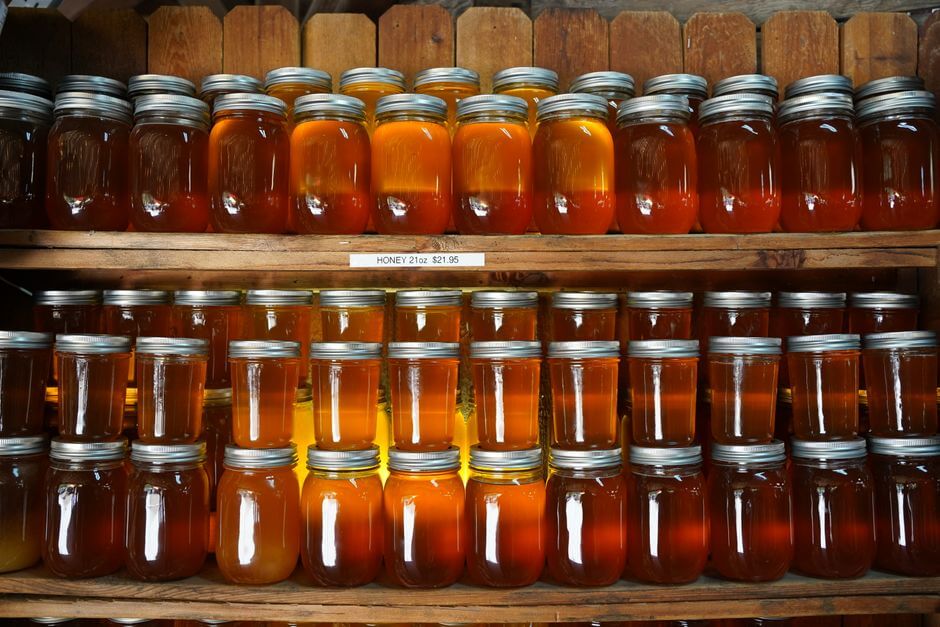
“You see, they don’t panic. They just work,” McKenzie beamed. “They love the white clover I planted out here, and they make the most delicious raw spring honey. My busy li’l bees turn fall wildflowers into a darker, richer honey, but the spring honey is my favorite and really popular with customers.”
This is the honey that is building Kickapoo Honey’s reputation: clean, light and unmistakably tied to the land.
Contact Kickapoo Honey: 600 E. Northside Drive, Clinton. The honey store is open 8 a.m.-5 p.m. Monday-Friday. Before you go, call to be certain someone is at the store: 601-946-4450.
This article was originally published by Mississippi Today and is republished here under a Creative Commons license.
Source: Original Article