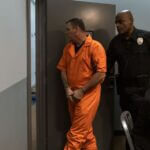
Priest to death row inmates urges Mississippi to repeal nitrogen as form of execution
By Jeff Hood | Originally published by Mississippi Today
Mississippi Today Ideas is a platform for thoughtful ideas to be shared about our state’s past, present and future. Opinions expressed in guest essays are the author’s own and do not necessarily represent those of Mississippi Today. You canread more about the section here.
I have watched two men killed with nitrogen. Both still haunt me.
In late 2023, Kenneth Smith asked me to be his spiritual adviser. We spent weeks together before Alabama filled his lungs with nitrogen gas. Like any priest and parishioner, we prayed and read Scripture together. We talked about what was coming.
I was wrong about everything. The horror of forced suffocation went far beyond anything that I could have imagined.
When the nitrogen gas began to flow, all of the espoused theories of humaneness ended. Kenny’s muscles wildly seized. His chest heaved with great force. I still do not know how a strapped body could actually move a steel gurney. His head slapped the inside of the mask over and over. Everything was moving everywhere all at once.
We were told he would be unconscious in seconds. Yet his veins kept rising against the skin. Saliva, mucus and other fluids kept pooling. His eyes looked like they might explode. I took off my glasses. I sobbed. I had never felt further from God.
That was January 2024. It was the first execution by nitrogen hypoxia in the history of the world.
In Mississippi, the method had already been legal for seven years.
Upon the enactment of House Bill 638, nitrogen went in as a contingency method in 2017. If a court struck lethal injection or it became unavailable, the state first would move to gas, then to the chair and then to the firing squad.
The bill answered lawsuits over the state’s lethal injection drugs. Though nobody on earth had watched a nitrogen execution, Mississippi wrote the method into law anyway.
Then, Mississippi took the conditions out.
In 2022, House Bill 1479 rewrote Section 99-19-51. The statute now leaves the method of execution to the discretion of the Corrections commissioner, the deputy commissioner for Finance and Administration and the deputy commissioner for institutions of the Mississippi Department of Corrections.
The options include nitrogen hypoxia, electrocution, firing squad or lethal injection. Though the law names injection the preferred method as a matter of state policy, preference does not mean requirement.
Nitrogen is no longer Mississippi’s fallback. Nitrogen is one of Mississippi’s four choices.
Nothing has to fail first. No court has to rule. No supply has to run short. Three officials decide. The law gives the condemned man seven days of written notice to learn what they picked. That is the whole procedure. Seven days to find out which apparatus the state selected to kill you.
The Legislature made that decision in 2022. It made it two years before anyone alive had seen what nitrogen does. Nobody in the Legislature had seen what I have.
None of this is abstract. Mississippi is killing again.
Richard Jordan was executed at Parchman on June 25, 2025. He was 79 and had spent nearly 50 years on death row. The state used a three-drug protocol beginning with midazolam. Jordan was the lead plaintiff in a federal challenge arguing that midazolam leaves a man awake for the burning and the suffocation that follow. Mississippi killed him with the drug he was suing over.
I was outside the fence that night. What stays with me is not the grief. It was the mood of the people running the thing. The staff seemed practically giddy. There was an air of celebration, the feeling a small town gets before the big football game. Now you want to hand those men a mask, a tank and the permission to suffocate people to death?
Thirty-five men remain on Mississippi’s death row.
Though Mississippi has recently chosen injection, nothing in the law requires it to choose injection again.
In 2017 and again in 2022, execution by nitrogen hypoxia existed only on paper – legislative reports, physiological assumptions and confident predictions about what a condemned man would feel. It was enough.
Eight men have now been killed with it. They are Kenneth Smith, Alan Miller, Carey Dale Grayson, Demetrius Frazier, Gregory Hunt, Geoffrey West, Anthony Boyd, all in Alabama, and Jessie Hoffman in Louisiana.
I was there for the first. I was there for the eighth.
Anthony Boyd also asked me to be his spiritual adviser. In the midst of deep prayer, we talked about God’s love.
Then the curtains opened, and the gas began. His chest heaved. His legs came off the gurney. He strained against the restraints. His breathing turned frantic and never stopped. By my count, Anthony was conscious and fighting for at least 19 minutes. He was pronounced dead at 6:33 pm. It was the longest nitrogen execution Alabama had carried out.
I called it the worst one yet. I still do.
The state has an answer for everything I just described. Convulsions become involuntary movement. Gasping becomes an expected physiological response. Terror becomes a reaction the man was not conscious enough to feel.
Each translation may be technically defensible. But not one of them tells you any of what the executed knew. Whether they knew is the only question that matters, and the vocabulary was built so that such a question never gets asked.
The count is mine. The men are not. Eight of them are now on the public record. Mississippi can read that record without producing a body of its own.
In June 2026, the argument stopped belonging to me and a handful of other witnesses.
The U.S. 11th Circuit ruled that Alabama’s nitrogen protocol presents a substantial risk of serious harm over and above death itself.
Judge Emily Marks then entered an order permanently barring Alabama from using the protocol against Jeffery Lee. The Supreme Court did not clear the way for the execution to proceed.
The federal district court found that a man under the mask through the use of nitrogen experiences air hunger. Panic, dread, suffering the court described as capable of being worse than pain. It placed the duration as being too long in minutes.
Minutes were enough for the federal courts.
I watched Anthony Boyd fight for 19.
Those who celebrate the Lee ruling should first understand how he won. Under current Eighth Amendment doctrine, a condemned man cannot simply prove that the state’s method tortures him. He must also provide evidence of a better way to kill him. Lee did. He proposed the firing squad.
The court found the firing squad feasible, readily implemented and a significant reduction of the risk. That finding is why the injunction was issued.
One of the most consequential execution method rulings in modern American history was won by a man who had to volunteer to be shot to death.
Now put that beside Mississippi’s list – injection, gas, electrical current, bullets. Four ways to reach one result, kept on the shelf so that losing one method never stops the process. The state is not asking which method is right. The state is asking which method survives.
That is not lawmaking. That is inventory.
Mississippi should strike nitrogen from the list.
Let’s be honest about what that accomplishes. Strike nitrogen and three methods remain. The chair does not go anywhere. The firing squad does not go anywhere. Mississippi would have removed one instrument from a cabinet stocked precisely so that the loss of an instrument changes nothing.
Strike it anyway.
A law can remain on the books long after the world that produced it has disappeared. Mississippi has already demonstrated that. Mississippi rejected the 13th Amendment, banning slavery in December 1865. It did not ratify it until 1995, 130 years later. The federal government did not formally record that ratification until 2013. Nobody in 1995 believed they were defending slavery. The thing simply sat there.
There is no reason to let nitrogen become another piece of legal residue waiting for someone else to remove it.
Repeal nitrogen now.
The Rev. Jeff Hood is a nationally recognized priest, theologian and founder of the Execution Intervention Project. As a spiritual adviser to death row inmates nationwide, he has accompanied 13 men to their executions, including the first and eighth nitrogen hypoxia executions. Widely regarded as the leading spiritual voice on the death penalty, his work has been profiled in outlets ranging from the New York Times to the Rolling Stone documentary, “The Spiritual Advisor.” For his service, he was nominated for the 2025 Nobel Peace Prize.
This article was originally published by Mississippi Today and is republished here under a Creative Commons license.
Source: Original Article