Monitoring and curbing West Nile virus takes more than a mosquito truck
By Anna Hu | Originally published by Mississippi Today
Wendy Varnado still remembers running behind the mosquito trucks. When she was a child in Edwards, in western Hinds County, in the 1980s, the trucks sprayed a haze of chemicals that mixed with engine smoke to create a dense fog the neighborhood children played in.
These days, mosquito trucks spray an ultra low volume mist that is nearly invisible, and Varnado, the Mississippi state public health entomologist, sees them in a different light. They’re now a tool she can harness against mosquito-borne diseases, including the most common one in Mississippi, West Nile virus.
There are now five confirmed human cases of West Nile virus in Mississippi this year in Hancock, Lincoln and Madison counties. This number is an undercount, Varnado said, because only a small percentage of cases are severe enough to send patients to the hospital where they can be tested.
While people can be infected with West Nile throughout the mosquito season, human diagnoses peak in August and early September. As Mississippi reports more positive cases of West Nile virus in mosquitoes, an early indicator of impending human infections, experts emphasize the importance of local surveillance and reducing mosquito breeding grounds.
The majority of people who get infected with West Nile virus don’t show any symptoms, said Santos Portugal, an urban entomologist at Mississippi State University. About one in five will develop symptoms like a fever, headaches and body aches. Less than one in a 100 may develop a severe disease that spreads into the nervous system and can cause swelling in the brain. Elderly and immunocompromised people are at higher risk for complications, including chronic fatigue, memory loss and in rare cases, death.
“Mississippians should recognize that West Nile virus is very serious,” Portugal said. “(It’s) not something people should necessarily be afraid of, just something to be understood and do what you can to protect yourself.”
Surveillance and control
Having up-to-date counts of where mosquitoes are infected with West Nile virus is one of the most powerful tools for disease prevention, Varnado told Mississippi Today.
“The mosquitoes tell you everything,” she said. “You can have at least a two week lead time on human cases by monitoring mosquito population, and two weeks is a long time to be able to do some intervention work.”
Out of 82 counties in Mississippi, only 11 have programs to routinely trap mosquitoes and send samples to the Mississippi Department of Health for testing. Nine have reported mosquitoes with West Nile virus.
The patchwork surveillance effort all goes back to funding, Varnado said. Some states have special “mosquito control districts” and raise money through local taxes for their mosquito programs, but Mississippi does not. Many counties contract with an external pest management company for their mosquito control.
Harrison County is one of the few counties with a dedicated mosquito control program that includes surveillance, mosquito control and education efforts. Director Gene Fayard has a seven person team, including someone dedicated to setting up traps across the county.
Every week, his team sorts through the collected mosquitoes and sends vials with female mosquitos to the Mississippi Department of Health, which has equipment to test for West Nile and the less common Zika and Chikungunya diseases.
Other personnel handle mosquito management. Mosquito trucks break up a liquid “adulticide” into micron sized droplets that kills adult mosquitoes upon contact. Another option is “larvacide,” which attacks mosquitoes in their juvenile stage. Many larvicides, including the ones found in stores, are based on naturally occurring bacteria that specifically target mosquitoes.
Of the two methods, larvicide is cheaper, more efficient and often better for the environment, Varnado said. Mosquitoes breed in or around standing water, and in their active months of roughly April to October, a ditch by the side of the road can contain thousands of larvae.
“It’s just easier to kill a million when they’re in a pothole,” she said.
But, she added, people like to see the mosquito truck, a tangible sign that mosquito control efforts are taking place.
“The spray truck isn’t the end all be all,” she cautioned. “It’s the surveillance and it’s the larviciding and it’s those prevention and source reduction activities. That’s where you’re gonna get all the bang for your buck.”
Be aware, but ‘don’t be a hermit’
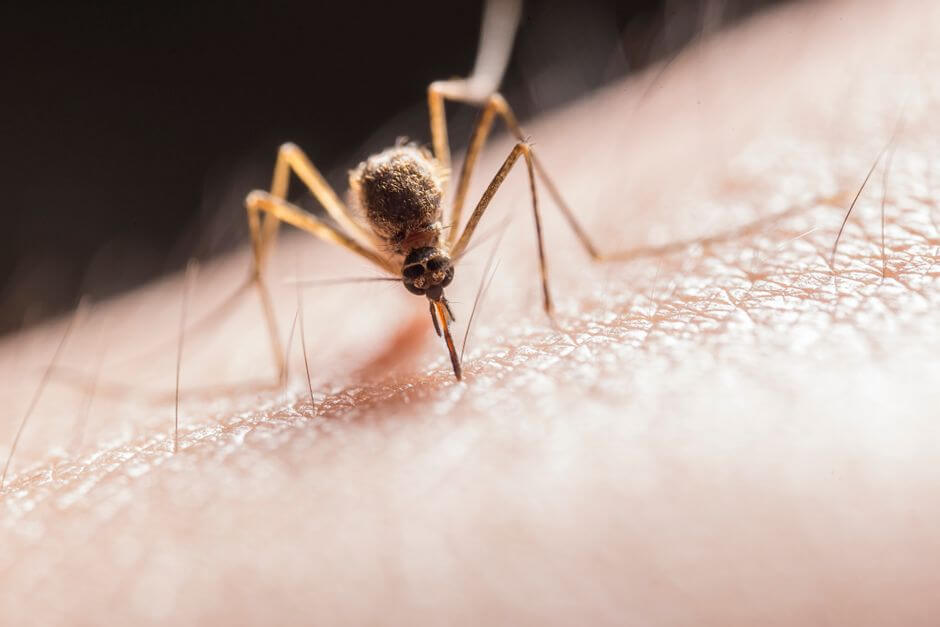
The mosquito species that carries West Nile in Mississippi is Culex quinquefasciatus, also known as the southern house mosquito. As the name suggests, this species is commonly found around human dwellings.
“This is an urban breeder,” Varnado said. “Things you do around your home make a difference with this mosquito.”
Portugal, who has a focus on mosquito education, said he encourages people to clean up potential breeding grounds around their home.
He’s met people who didn’t realize the ‘wiggly things in the bucket of water behind the shed’ are actually mosquito larvae, and that dumping the bucket could reduce the presence of mosquitoes around their home. Other common culprits are clogged gutters and storm drains filled with organic matter such as grass clippings.
The southern house mosquito likes “stinky water” and like most mosquitoes, doesn’t fly far.
“If you go outside and you’re just getting pelted by mosquitoes, depending on the species, there’s a good chance that the breeding source is actually pretty close to where you are,” he said.
The Harrison County mosquito program also does outreach, including at local schools and community events. They got their first positive mosquito samples in late July, although no human cases yet. As much as he wants people to be aware of the mosquito-borne illnesses, Fayard keeps the danger in perspective. Because there is a relatively small chance of developing a severe case, he doesn’t want to discourage people from spending time outside.
“Use repellent, try not to be outdoors at dusk and dawn. That’s the most active time,” he said. “Long pants when possible, but don’t panic, don’t stay inside and be a hermit.”
This article was originally published by Mississippi Today and is republished here under a Creative Commons license.
Source: Original Article