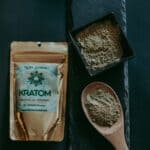
Lawmakers on Wednesday considered steps to further restrict kratom, a debate reignited by the recent deaths of two University of Mississippi students who were found near suspected kratom derivatives.
Members of the House Drug Policy Committee, led by Rep. Beth Waldo, a Republican from Pontotoc, heard testimony from state health officials, law enforcement officers and doctors as well as Mississippians who have used kratom. Several health and law enforcement officials advised legislators to classify all forms of kratom and its synthetic derivatives as controlled substances.
In doing so, they echoed the mother of Robert Strang, one of the two University of Mississippi students who died in September. She blamed her son’s death on failed enforcement of federal drug regulations and implored lawmakers to ban the substances.
“My position is clear. All kratom products need to be banned,” Rebecca Strang of Atlanta told lawmakers Wednesday.
Over 5 million Americans have used a kratom product in their lifetime, according to a recent study from the Journal of Addiction Medicine. Derived from a tropical evergreen tree native to Southeast Asia, kratom leaf herbal products and concentrated or synthetic kratom-derived products are widely sold in gas stations and tobacco or vape shops.
Critics of kratom argue that it is a highly addictive and dangerous drug that produces stimulant- and opioid-like effects, and that synthetic kratom products are difficult to regulate. But advocates argue it can be an effective tool for treating opioid use disorder, chronic pain and depression.
In August, the Department of Justice announced the temporary emergency scheduling of some potent kratom-related compounds. The action did not apply to traditional botanical kratom.
As of January, 30 states had laws regulating kratom or its components. Six states, including Alabama, Arkansas and Louisiana, classify the substance’s primary chemical compounds as controlled substances, resulting in kratom products being banned.
Mississippi restricted kratom purchases to people ages 21 and older and prohibited sales for potent kratom extracts in 2025. The bill, authored by Rep. Lee Yancey, a Republican from Brandon, and signed into law by Gov. Tate Reeves, instituted fines for people under 21 who buy or possess kratom and retailers that sell it to them.
But several speakers on Wednesday told House members the law did not go far enough to protect the public.
Oxford Police Chief Jeff McCutchen, who also serves as the president of the Mississippi Association of Chiefs of Police, said the law was not sufficient because it sets low fines — up to $1,000 for selling a restricted product — and requires law enforcement officers to test products for compliance.
“The law is set up for us to fail,” McCutchen said.
Col. Phillip Pope, the director of the Mississippi Bureau of Narcotics, agreed, adding that to enforce the law, officials must buy the products from gas stations and send them to laboratories for testing using taxpayer dollars.
State health officials, including State Health Officer Dr. Dan Edney, who has a subspecialty board certification in addiction medicine, and Dr. Tom Recore, the Department of Mental Health’s medical director, have recommended scheduling kratom as a controlled substance.
Philip Chamblee, the executive director of the Mississippi Petroleum Marketers and Convenience Stores Association, said the organization’s board voted unanimously last week to support a statewide ban on the sale of all kratom products.
Some speakers argued that lawmakers should consider the distinction between natural forms of kratom and more potent synthetic derivatives.
Sheldon Bradshaw, an attorney representing Botanicals for Better Health and Wellness and former chief counsel for the Food and Drug Administration, said natural forms of kratom have been unfairly associated with the University of Mississippi student deaths.
He said synthetic kratom derivatives often market themselves to suggest they are natural products.
“The snake oil salesmen want people to believe they’re kratom, but they’re not kratom,” Bradshaw said.
During the hearing, Sherry Owings, 63, of Mississippi, said she began using kratom after struggling with chronic pain and the side effects of prescription medications. She said kratom has improved her quality of life.
“I don’t want to go backwards,” she said, advocating regulation and transparency about the ingredients in kratom but urging lawmakers not to restrict natural forms of the substance.
Officials said more Mississippians are seeking help for kratom addiction.
Wendy Bailey, the executive director of the Mississippi Department of Mental Health, said the agency’s helpline has received a sharp increase in calls over the last two months from callers experiencing addiction to kratom.
Among those calls, she described one man struggling to manage withdrawal symptoms and a nurse who began taking kratom for fatigue before losing her job due to her addiction.
“I think we have the opportunity to approach this from a public policy perspective,” Bailey said.