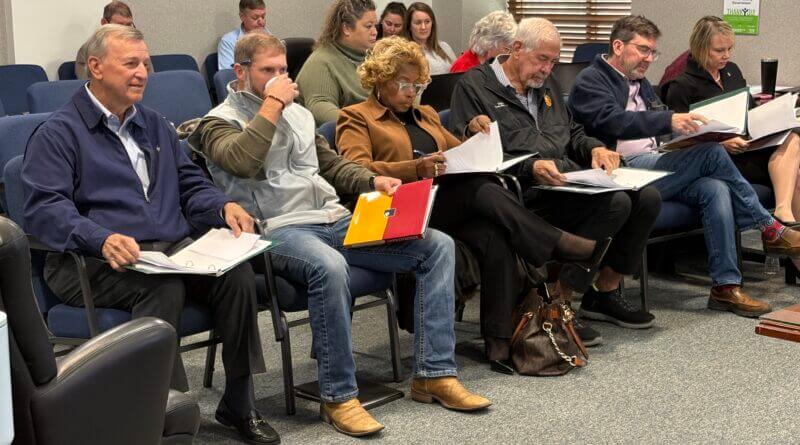
Photo: Legislators listen to county priorities during Monday’s Board of Supervisors meeting. From left, state Reps. Doc Harris, Justin Keen, state Sen.-elect Theresa Gillespie Isom, state Sen. Kevin Blackwell, state Reps. Dan Eubanks, and Kimberly Remak. (Bob Bakken/desotocountynews.com)
HERNANDO, Miss. — DeSoto County supervisors, during Monday’s Board of Supervisors meeting, presented a slate of critical infrastructure and public safety needs to their state legislative delegation this week, headlined by a $300 million wastewater overhaul and a renewed push for sheriff’s department radar enforcement.
The 2026 Mississippi legislative session is scheduled to convene at noon on Tuesday, Jan. 6, 2026, though lawmakers are currently preparing for the 2025 session where many of these funding requests will initially be debated.
Topping the priority list is the Horn Lake Interceptor Sewer District. County officials warned legislators of a looming crisis affecting approximately 75,000 customers. The City of Memphis, which currently treats the district’s wastewater, intends to cease that service, forcing DeSoto County to develop, engineer, and install an independent system by 2031.
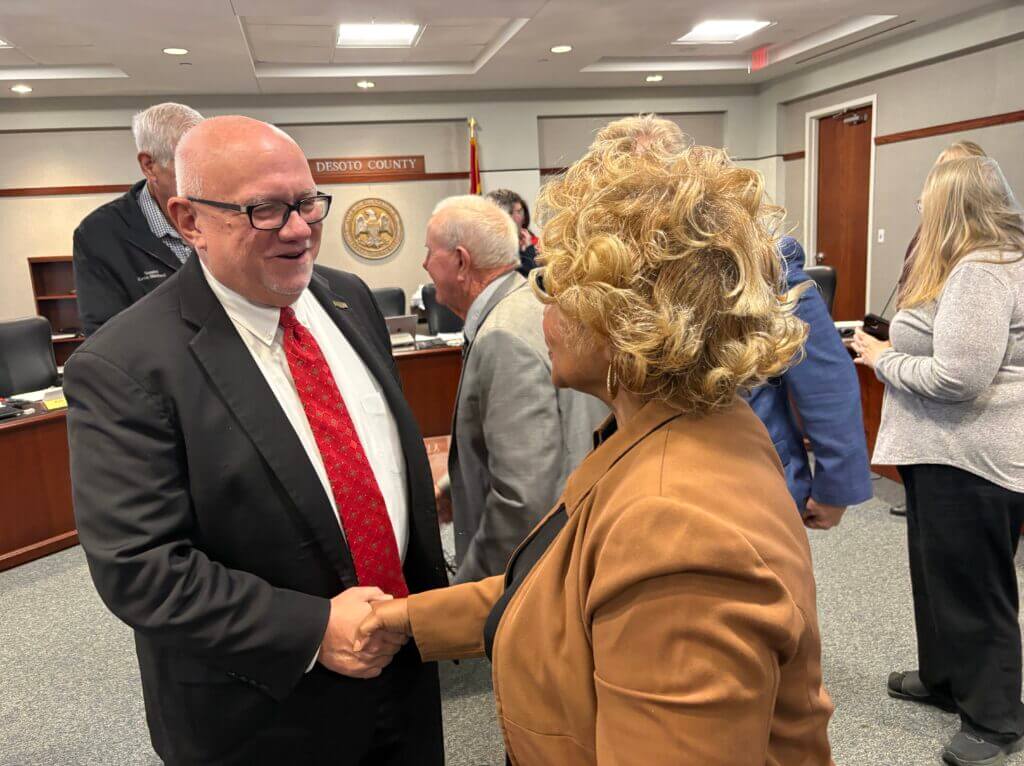
Supervisor Mark Gardner and state Sen.-elect Theresa Gillespie Isom exchange greetings at Monday’s meeting. (Bob Bakken/desotocountynews.com)
Supervisors requested $20 million in state funds for 2026 to assist with the transition. The project’s total estimated cost is $300 million, with the county seeking a mix of federal and state appropriations, including $150 million through the State Revolving Fund (SRF).
“Funding is, of course, the issue,” supervisors noted during the presentation, emphasizing the need for immediate engineering support to meet the strict deadline.
Infrastructure and Justice Center Needs
Traffic congestion on state Highway 305 remains a primary concern for District 1 Supervisor Jessie Medlin of Olive Branch. Citing heavy truck traffic and narrow lanes near school zones and subdivisions, Medlin requested funding for a new environmental and engineering study to prepare the road for widening.
“To me, it’s the most important highway in the county,” Medlin told legislators. “I know how dangerous it is.”
The board also highlighted the county’s judicial growing pains. With the state appointing additional judges to handle DeSoto’s surging caseload, the current courthouse is at capacity. Officials proposed a new Justice Center, potentially attached to the county jail to reduce inmate transportation costs. The project is estimated to exceed $100 million, and the county is seeking state assistance for architectural studies and construction.
Public Safety Legislation
The delegation also discussed two legislative adjustments regarding public safety:
Radar Enforcement: DeSoto County remains one of the few jurisdictions where the sheriff’s department is prohibited from using radar for speed enforcement. Sheriff’s officials and supervisors asked legislators to support a local and private bill allowing radar use specifically in subdivisions and school zones. Legislators noted that a unified front from the Mississippi Sheriffs’ Association might finally help the measure pass.
School Resource Officers (SROs): The county currently spends approximately $6 million annually to place SROs in 41 public schools. While the Sheriff’s Department also provides officers for three private schools (Northpoint Christian, Sacred Heart School, and DeSoto Christian Academy, current state statute prohibits private institutions from reimbursing the county for these costs. Supervisors requested a legislative amendment to allow private schools to contribute financially to their own security.
Legislators in attendance, including Sen. Kevin Blackwell and Reps. Justin Keen, Kim Remak, Dan Eubanks, and Doc Harris, along with state Sen.-elect Theresa Gillespie Isom, acknowledged the requests and discussed strategies for navigating the appropriations process in Jackson.
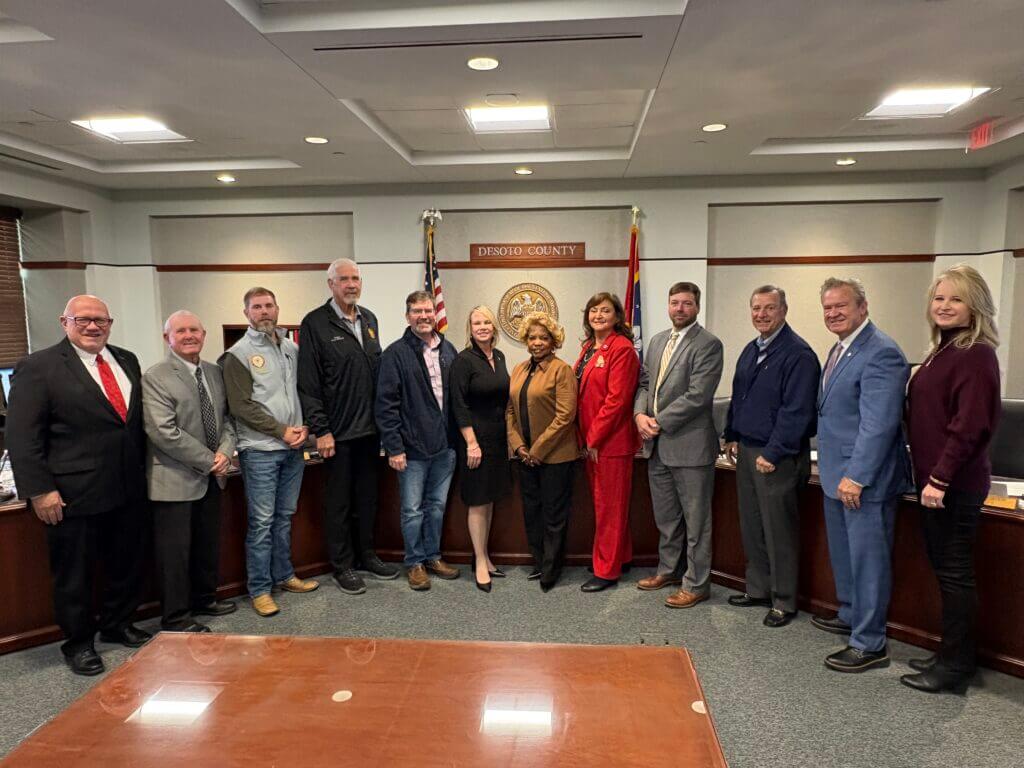
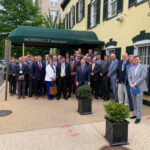
County officials and legislators pose for a photo after their session regarding the county’s legislative priorities. (Bob Bakken/desotocountynews.com)
Bob Bakken provides content for DeSoto County News and its social media channels. He is an award-winning broadcaster, along with being a reporter and photographer, and has done sports media relations work with junior and minor league hockey teams. Along with his reports on this website, you will find this veteran media member providing sports updates on Rebel 95.3 FM Radio.