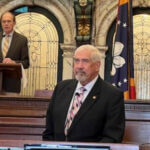
HERNANDO, Miss. — DeSoto County District Attorney Matthew Barton issued a strong challenge Monday against a new state law creating a majority-minority judicial sub-district, calling the measure “fundamentally unfair” and threatening legal action if the Mississippi Legislature does not repeal it.
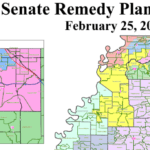
The controversy centers on House Bill 1544, signed into law during the last legislative session. The bill redrew lines for the 23rd Circuit Court Judicial District to include a new sub-district covering much of Horn Lake and a small portion of Southaven.
While the legislation increases the number of judges serving DeSoto County from three to four next year, Barton argues the structure of the election is flawed. Under the new map, one of the four judges will be elected solely by voters within the sub-district—representing approximately 19 percent of the electorate—yet that judge will possess county-wide jurisdiction.
“The formula for fairness is very simple: if a judge represents everyone in the county, everyone in the county gets to vote,” Barton said in a statement. “It is problematic when 81 percent of voters are cut out of the democratic process in DeSoto County because some people in Jackson are concerned about a lawsuit that was not coming.”
Preemptive Redistricting
The creation of the sub-district occurred in tandem with the state’s redrawing of legislative districts, a move necessitated by a successful federal lawsuit filed by the NAACP and ACLU to uphold the Voting Rights Act of 1965. That lawsuit resulted in special elections held earlier this November.
According to Barton, the legislature “over-corrected” when redrawing the judicial maps in an attempt to preempt similar litigation. He characterized the resulting map as a “DEI sub-judicial district” that prioritizes racial quotas over voter equality.
“The map in question was an attempt to give Black voters equal rights, but that is not what it accomplished,” Barton stated. “This is not like a legislative district where a carved-out section of the county elects someone from within the district to represent the district. Contrarily, this is a small sub-district empowered to elect someone to represent everyone who lives outside the sub-district.”
Concerns Over Accountability
Barton linked his opposition to broader concerns about judicial accountability, referencing the public outcry following the sentencing in the Lindsey Whiteside case. He argued that allowing a judge to hold power over the entire county while being answerable to only “9 out of 47 voting precincts” creates a dangerous shield from public oversight.
“We saw in the Lindsey Whiteside case that there really is no oversight to judges except voters,” Barton said. “If we want true accountability… we cannot allow an elected judge to be shielded from the vast majority of voters they serve.”
Potential Legal Challenge
The District Attorney also argued that the new district contradicts current trends in the U.S. Supreme Court, citing the Louisiana v. Callais case as evidence that the high court is moving away from race-based mandatory districts.
Barton called on the Mississippi Republican Party and state legislators to repeal the sub-district in the upcoming session and convert the position to an at-large, county-wide seat. However, he made it clear he is prepared to escalate the issue if necessary.
“If Republicans will not do what is necessary to prevent this seat from being handed to a Democrat… I will do everything within my power to stop it myself, including going to court,” Barton concluded.
Bob Bakken provides content for DeSoto County News and its social media channels. He is an award-winning broadcaster, along with being a reporter and photographer, and has done sports media relations work with junior and minor league hockey teams. Along with his reports on this website, you will find this veteran media member providing sports updates on Rebel 95.3 FM Radio.