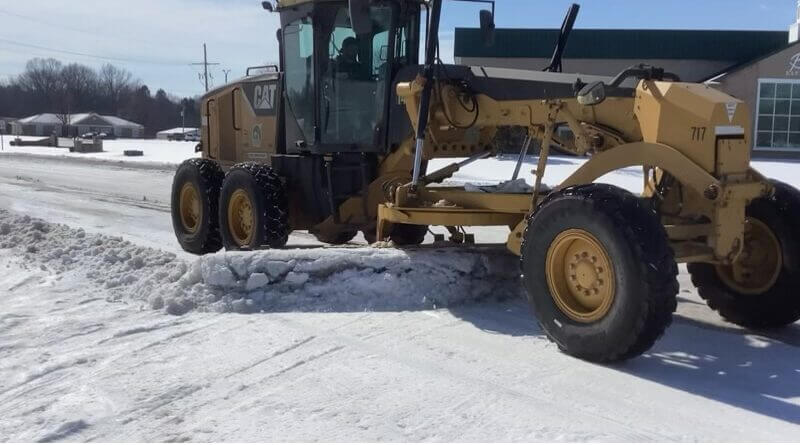
Photo: A DeSoto County grader assists in clearing snow from state Highway 301 during last week’s storm aftermath. (Courtesy photo)
HERNANDO, Miss. — DeSoto County officials met during a Monday Board of Supervisors meeting to evaluate the local response to a paralyzing ice storm, outlining critical infrastructure gaps and celebrating “ninja-like” rescue efforts.
The debriefing highlighted the life-saving work of road crews and Emergency Services, who worked through sub-zero temperatures to help clear a 22-truck jam on I-22 and reach patients trapped by frozen terrain.
Infrastructure Lessons Learned From Solid Ice
The primary challenge identified was the rapid accumulation of ice that rendered standard equipment ineffective.
The 4WD Gap: Officials noted that two-wheel-drive vehicles, including some police Tahoes, were unable to navigate residential coves and steep inclines.
Equipment Shortages: Maintenance crews reported lacking heavy machinery necessary to clear parking lots before slush hardened into “solid blocks of ice.”
Contractor Availability: Supervisors expressed frustration that private contractors were fully booked during the peak of the crisis.
County leaders suggested establishing pre-approved emergency agreements with an “arsenal of contractors” to ensure priority service during future weather events.
Digital Outreach And Public Safety
Community Services Director Christie Barclay received commendation for a digital strategy that reached millions. The county’s Facebook page recorded over 4 million views during the storm.
A viral video of vehicles sliding on ice served as a significant deterrent, successfully keeping residents off the roads. The county gained more than 3,300 new followers as residents sought real-time updates on road closures and utility outages.
Policy Shifts For Private Property
A point of discussion involved the clearing of private driveways. While crews assisted elderly residents in medical distress, officials clarified that public resources cannot legally be used for general private property maintenance.
To assist residents in the future, leaders proposed partnering with local retailers like Lowe’s or Home Depot to create “point of distribution” (POD) sites for salt and sand.
Legislative Challenges For EMS Funding
Emergency Services leaders briefed the board on a critical state-level battle regarding insurance reimbursement. Currently, insurers are reportedly failing to pay the state-mandated 325 percent of Medicare allowable rates.
“EMS is not a money-making scheme,” it was noted, warning that unpaid claims could shift the entire financial burden of 911 response to local taxpayers.
Officials are also monitoring “very political” legislation that could move Emergency Services, Fire, and MEMA under a new state department, which local leaders fear may jeopardize existing funding structures.
Bob Bakken provides content for DeSoto County News and its social media channels. He is an award-winning broadcaster, along with being a reporter and photographer, and has done sports media relations work with junior and minor league hockey teams. Along with his reports on this website, you will find this veteran media member providing sports updates on Rebel 95.3 FM Radio.