High-level U.S. Army Corps of Engineers leadership conducted an extensive tour of DeSoto County infrastructure to evaluate flood control and wastewater systems.
Federal and local officials focused on long-term resilience strategies to protect residential areas and critical transportation corridors from future weather events.
The partnership emphasizes the connection between robust infrastructure and the county’s continued economic expansion in the Mississippi Valley.
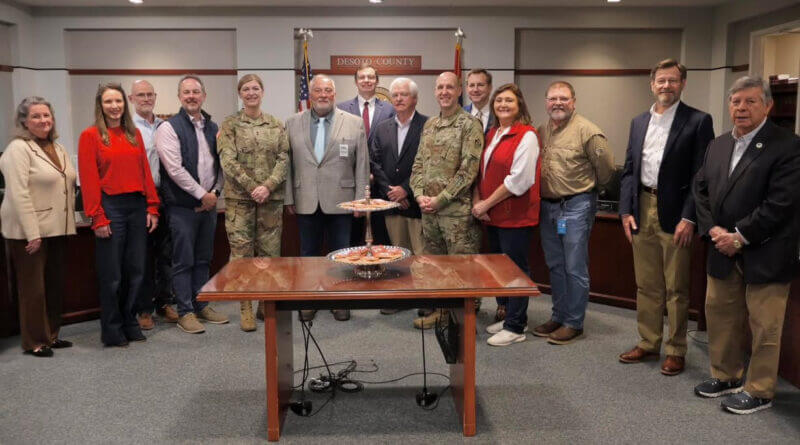
HERNANDO, Miss. — High-ranking officials from the U.S. Army Corps of Engineers (USACE) met with DeSoto County leaders this week to inspect a series of critical infrastructure projects designed to overhaul flood control and wastewater management across the region.
The delegation, led by Maj. Gen. Kimberly Peeples, Commander of the Mississippi Valley Division, and Col. John Morrow, Commander of the Memphis District, joined the Board of Supervisors at the County Administration Building. The meeting served as a strategic summit to align federal resources with local needs as the county faces increased pressure from rapid development and shifting environmental demands.
Following the briefing, the group transitioned to the field, touring several project sites where upgrades are currently underway. The visit focused on the dual priorities of modernizing aging drainage systems and implementing advanced flood risk mitigation to safeguard homes, businesses, and vital transit routes.
“The partnership with the Corps is vital to our mission of ensuring the safety and prosperity of our residents,” said Supervisor Lee Caldwell. “Their technical expertise and support for flood risk reduction, particularly in the northern reaches of the county, are foundational to our long-term resilience.”
The collaborative effort comes at a time when infrastructure durability has become a central pillar of economic policy. Local officials noted that the ability to attract new industry and maintain a high quality of life is tethered to the reliability of the county’s water management systems.
Discussions during the tour also explored future initiatives, including potential federal funding avenues and technical assistance for upcoming drainage expansions. Both federal and local representatives emphasized that the visit was not merely a routine inspection but a commitment to a multi-year strategy to reduce vulnerability to 100-year flood events.
By integrating federal oversight with local topographical knowledge, officials aim to create a blueprint for infrastructure that can withstand the rigors of the next several decades. As the county continues to grow, the Corps and the Board of Supervisors confirmed that maintaining this level of cooperation remains 100 percent essential to the region’s stability.
Bob Bakken provides content for DeSoto County News and its social media channels. He is an award-winning broadcaster, along with being a reporter and photographer, and has done sports media relations work with junior and minor league hockey teams. Along with his reports on this website, you will find this veteran media member providing sports updates on Rebel 95.3 FM Radio.