Mississippi bill linking union restrictions to economic grants heads to governor
A bill that would tie union organizing restrictions to economic development incentives is headed to Mississippi Gov. Tate Reeves’ desk for final approval.
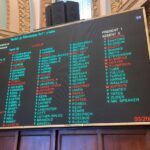
Senate Bill 2202, which passed the House last week, would require businesses receiving state economic development grants to agree to labor organizing stipulations. The legislation would ban employers from recognizing unions solely by a card check and would mandate secret ballot elections for union recognition.
The bill also prohibits agreements that restrict employers from campaigning against unions during organizing efforts and bans companies from providing employee contact information to union organizers without written consent. House Business and Commerce Committee Chairman Lee Yancey, a Republican from Brandon, said the bill aims to attract businesses by giving them more flexibility.
“This is us having a say in what we spend our dollars on and what kind of activities it promotes,” Yancey said. However, Democrat Rep. Oscar Denton of Vicksburg, a longtime union member, expressed concern that the legislation might discourage companies from relocating to Mississippi.
“We must ask whether it is appropriate for the state of Mississippi to condition economic incentives on how employees exercise federally protected rights,” Denton said. “Economic development should be about jobs, infrastructure and opportunity – not about limiting how workers organize themselves.”
The bill would require private ballots for union recognition, eliminating the option for employers to voluntarily recognize unions based on signed authorization cards. It also restricts employers from sharing employee contact information without approval and bans neutrality agreements, which prevent employers from advocating for or against union efforts.
Yancey defended the measures, stating they are reasonable for companies receiving state funds. Denton argued the bill could favor management in organizing campaigns, comparing it to a race where conditions are uneven.
Mississippi is a right-to-work state, meaning workers cannot be forced to join a union or pay dues. Employers can also fire workers at will for almost any reason. About 5% of Mississippi workers are union members, according to the U.S. Bureau of Labor Statistics.
If Reeves signs the bill, Mississippi would become the first state to ban neutrality agreements and the fourth to require private ballots, according to Workers for Opportunity, a national employee rights group.
Source: Original Article